

 Posted by

“Today Science is up on a pedestal. A new god has appeared; his high priests conduct the rituals, with nuclear reactors, moon-probing rocket ships, cathode tubes and laser beams. And their territory is sacrosanct; laymen are denied entry.” – Bruce Cathie
For many people, the IDEA of peer review occupies special—even sacred—territory in the world of science. However, investigation of suppressed innovations, inventions, effective medical treatments, non-toxic cures, and so on rapidly reveals that the peer review system is arguably better at one thing above all others: censorship. Whether this is censorship of contrarian viewpoints or innovations that render favoured dogmas, products, or services obsolete, i.e. economic threats, depends.
Regardless, the problem is now recognised by many critics as endemic, as many scientists have had to learn the hard way. The defects in the peer review system have been the subject of a profusion of editorials and studies in the literature over recent years.
Clearly there is a problem—and denial won’t solve it.
As Dr David Kaplan professor of pathology at the Case Western Reserve University in Cleveland, tells us,
Peer review is known to engender bias, incompetence, excessive expense, ineffectiveness, and corruption. A surfeit of publications has documented the deficiencies of this system.
Australian physicist Brian Martin elaborates on this theme in his excellent article Strategies for Dissenting Scientists:
Certain sorts of innovation are welcome in science, when they fall within established frameworks and do not threaten vested interests. But aside from this sort of routine innovation, science has many similarities to systems of dogma. Dissenters are not welcome. They are ignored, rejected, and sometimes attacked.
Electric universe researcher Wal Thornhill stated plainly in my interview with him that the peer review system amounts to censorship. Fellow independent scientist Gary Novak is also scathing, stating: “Peer review is a form of censorship, which is tyranny over the mind. Censorship does not purify; it corrupts…There is a lot of junk science and trash that goes through the peer review process.”
He is absolutely correct on this last point, as we will see shortly.

Brian Martin asks what scientists
have to gain by spending time helping an outsider? Most likely, the alleged discovery will turn out to be pointless or wrong from the standard point of view. If the outsider has made a genuine discovery, that means the outsider would win rewards at the expense of those already in the field who have invested years of effort in the conventional ideas.
This means that the influential and powerful on the “inside” of the Old Boys Club can and often do become gatekeepers, or a form of threshold guardian who will only yield to the correct affirmatory magic words that validate and reify the entrenched theories or sacred products. Otherwise, as Gandalf tells the fire demon, “You shall not pass!”
Incidentally, innovators and dissidents, are often cast as “demons”—or demonised—by Establishment Guardians who are threatened by novelty.
Scientists, just like laypeople, have susceptible emotional bodies and often fairly hefty egos—partially due to their “expertise” and academic titles, qualifications, theories, etc. Dr Malcolm Kendrick comments in Doctoring Data that, “by definition, anyone who is an ‘expert’ in an area of medicine will be a supporter of whatever dogma holds sway.”

Close study of power dynamics in medicine bears this out—and we should never forget the Golden Rule: Whoever has the gold makes the rules. Corporations increasingly dominate oversight and funding of so-called “scientific research.”
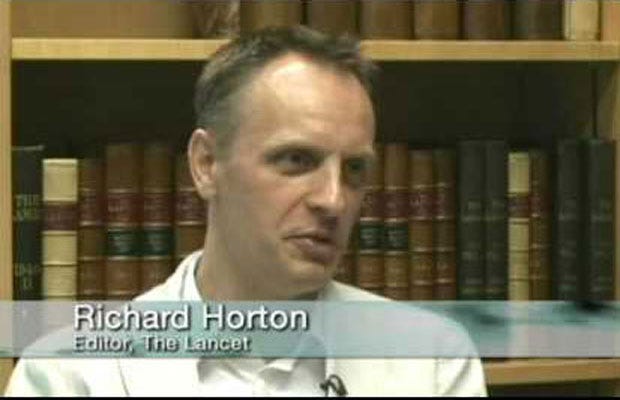
Consider the following words from The Lancet’s editor Richard Horton:
The mistake, of course, is to have thought that peer review was any more than a crude means of discovering the acceptability—not the validity—of a new finding…We portray peer review to the public as a quasi-sacred process that helps to make science our most objective truth teller. But we know that the system of peer review is biased, unjust, unaccountable, incomplete, easily fixed, often insulting, usually ignorant, occasionally foolish, and frequently wrong.
Peer review, as a “quasi-sacred” process that somehow supposedly transcends the foibles and follies of human nature, has long since unconsciously taken on sacred ritual status. Has the paper been blessed by the Peer Review Priest? If not then it is epistemologically unclean, tainted, and sinful. “Get thee behind me, Satan!,” as Jesus tells Peter in the Bible.

In April of 2015 Horton attended a secretive symposium on the reproducibility and reliability of biomedical research, at the Wellcome Trust in London. Attendees were strongly discouraged from reporting what any government agents said, or to take photos of the slides presented. The symposium, Horton reports, “touched on one of the most sensitive issues in science today: the idea that something has gone fundamentally wrong with one of our greatest human creations,” that creation being science itself.
One anonymous attendee stated that “A lot of what is published is incorrect,” acknowledging that large amounts of what is published as “science” amounts to little more than toilet paper. Horten, as the veteran editor of a prestigious scientific journal, is scathing:
The case against science is straightforward: much of the scientific literature, perhaps half, may simply be untrue. Afflicted by studies with small sample sizes, tiny effects, invalid exploratory analyses, and flagrant conflicts of interest, together with an obsession for pursuing fashionable trends of dubious importance, science has taken a turn towards darkness. As one participant put it, “poor methods get results”…The apparent endemicity of bad research behaviour is alarming. In their quest for telling a compelling story, scientists too often sculpt data to fit their preferred theory of the world. Or they retrofit hypotheses to fit their data.
To be clear – and this is no insignificant matter—what Horton is criticising here is not the scientific METHOD, but the poorly conducted misleading studies that masquerade as real science. An entire episode could be devoted to this important distinction between scientific method and the body of accepted so-called “scientific facts”, but let’s just make a few brief comments for clarity.
Science is simply a method of inquiry – THE scientific method – natural science, I mean. The purpose is to adjudicate the CAUSE of a phenomenon in the natural and physical world.
That’s it. It is simply a method. It doesn’t “speak”. It isn’t “consensus”. It also has nothing to do with correlative studies—most research today.
By definition, if someone claims “this is scientific” and it has NOT gone through the steps of the scientific method, it is pseudoscience, and THAT is what we see overtaking the academic stage.
He hits the nail on the head. Speaking of nails, the brilliant herbalist Stephen Buhner also makes the point succinctly by further clarifying the linguistic problem here:
Nearly all people in the sciences, or its admirers, tend to refer to the practice of the scientific method not as a technique or an arena of study but in more godlike terms such as: “I found an insect new to Science;” … “We did it for Science.” In other words, linguistically, the practice of the scientific method is not spoken of as a human pursuit, but rather as service to a divine being known as “Science.”
Science, however, is not a living being, it can’t know anything, possess anything, be or do anything, and it certainly doesn’t “want” stuff. It is a tool, like a hammer. “We found an insect new to hammer” reveals the linguistic absurdity involved. Nevertheless the majority of practitioners talk about it as if it is indeed a living being of huge stature whom they serve. (Feb. 5, 2017)
The very same linguistic absurdity Buhner exposes also applies to the very title of this article. Imagine if I called it: “Is hammer broken?” We would normally consider this “broken English.”
I would add that the religious sort of mentality highlighted by Buhner—where science is spoken of as a divine being—only feeds the already rampant dogmatism surrounding many realms of so-called scientific endeavour. This should be kept in mind any time you hear people referring to “the science” or “trusting the science.”

When Horton says science has turned towards darkness he’s really denoting the way that so many of the humans presumed to be practising science have themselves turned towards darkness and ceased rigorously employing true scientific method—usually in order to serve the agendas of those who pay their salaries.
As one of Horton’s colleagues put it, “poor methods get results,” but if that’s the case you’re not really practising science anymore but are engaged in pseudoscience prepared for PR and marketing purposes, perhaps to justify your job title, or help your employer get a new product to market…
Journal editors deserve their fair share of criticism too. We aid and abet the worst behaviours. Our acquiescence to the impact factor fuels an unhealthy competition to win a place in a select few journals. Our love of “significance” pollutes the literature with many a statistical fairy-tale. We reject important confirmations. Journals are not the only miscreants. Universities are in a perpetual struggle for money and talent, endpoints that foster reductive metrics, such as high-impact publication. National assessment procedures…incentivise bad practices. And individual scientists, including their most senior leaders, do little to alter a research culture that occasionally veers close to misconduct.
An interesting dichotomy emerges: those on the inside in the know, are aware that medical science has taken a turn into darkness, and peer review is broken.
Meanwhile, much of the general public, and significant portions of the professional world still think of peer review as not only viable, which clearly it is not, generally speaking—but it’s held as a transcendent, almost magical, organizing force occurring in the heavenly ivory towers of Science—a divine force wielded by gods that avoids falling prey to human weaknesses by virtue of the lofty qualifications of those masters of reality called “scientists.”

Scientists, in this mythology, aren’t quite human—they are something more, something pure, something that the layman can never be—an epistemological ubermensch. Students of science and medicine undergo a magical alchemical process as they proceed through approved educational institutions and emerge transformed from their chrysalis with their doctorates, masters, stethoscopes and equations.
They are the Chosen Ones, the purified, the holy, the redeemed, the righteous. The High Priests of secular modern culture. Their holy dispensations are not to be questioned.
It is abundantly clear, however, that not only is the popular view of peer review misleading, but the most prestigious publications are some of the very worst offenders. Significant scientific publications—for example, the journal Nature—have a well documented history of prejudice against findings or hypotheses that run contrary to established scientific dogma, ironically treating many scientists of today the way the Catholic Church treated Galileo, Copernicus, and Bruno.
Sackett says that “…progress towards the truth is impaired in the presence of an expert.”
As I said, Gatekeepers.
Trusting “experts” in oncology, for example, is generally a very good way to artificially speed one’s trip to the grave, particularly if you have metastatic cancer. And don’t get me started on how correctly prescribed treatments are one of the leading causes of death in America today—and THOSE ARE JUST THE CORRECTLY prescribed ones!
And yet, never ones to let unbiased research get in the way of a profitable theology, establishment-supported “Experts” are now on a rarified level that perhaps only celebrities can understand—and are virtually promoted as demigods today.
The cult of celebrity is alive and well. We seem to be replacing evidence and logic with popularity, authority, and feelings—and replacing orthodox religion with the Cult of Scientism and Church of Modern Medicine.
In the main, “experts” are those people in the establishment who espouse the mainstream dogma and reify the politically correct belief structures that profit vested interests.
“Experts” are lionized because the world that made them experts promotes and validates them when they affirm the already established beliefs—and the mainstream/legacy media is not just complicit in this, it is absolutely instrumental in indoctrinating great swaths of humanity into whatever commercially profitable expert-approved theology holds sway, while all the dissident and equally qualified experts are deliberately excluded from coverage.
If you want to be horribly misled on any number of important issues, just head straight to the legacy media—whether print or TV—and listen to the establishment’s “experts.”
Harvard Medical School’s Dr. Marcia Angell is the former Editor-in-Chief at the respected New England Journal of Medicine. She tells us:
It is simply no longer possible to believe much of the clinical research that is published, or to rely on the judgment of trusted physicians or authoritative medical guidelines. I take no pleasure in this conclusion, which I reached slowly and reluctantly over my two decades as an editor of The New England Journal of Medicine.
Consider this statement carefully if you have been considering receiving the latest and “greatest” experimental pointy thingy.

I’m reminded of Horton’s words about journal editors: “We aid and abet the worst behaviours…Our love of “significance” pollutes the literature with many a statistical fairy-tale.”
Using statistical manipulation, the high priests of the Church of Modern Medicine can turn unfavourable results into apparent life-saving “breakthroughs” worthy of the 6 o’clock news (controlled by the same people who own Big Pharma). Relatively few lay people seem aware of the various methods of manipulation the public is victimised by.
Medicine and, science in general, to paraphrase physicist Max Planck “advance one funeral at a time.”
Once the public has accepted the scientific establishment’s truths, narratives, and designated “experts” then researchers whose results—or methods!—deviate from the accepted norm can be immediately branded as crackpots, lunatics, law-breakers, fringe nuts, pseudo-scientists and so on, regardless of how meticulous their methods, and irrefutable their results.
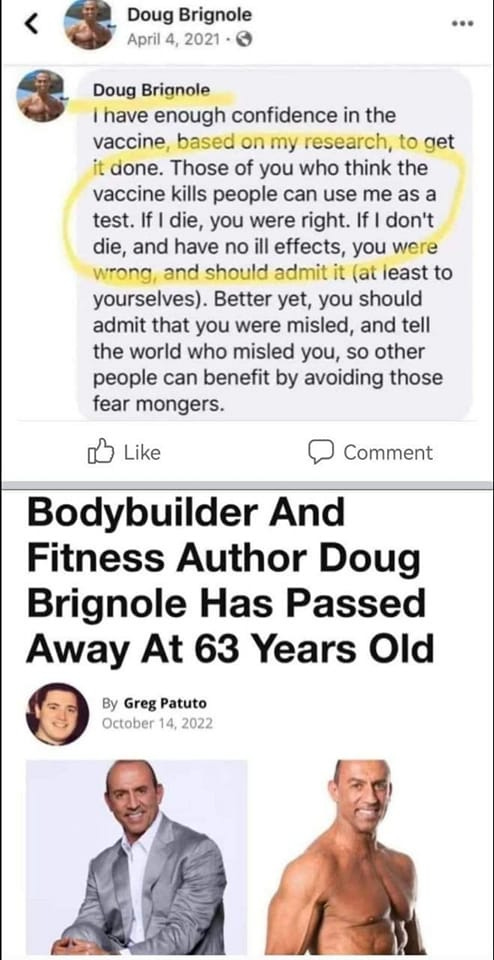
The media is crucial in this control dynamic because it sells the Establishment’s reality, while simultaneously waging a psychological war against consumers, programming them to passively accept the weakest evidence and most illogical arguments and contradictions without question.
The opinions and advice of “expert panels” rank the lowest in the 7-level hierarchy of medical evidence, and yet, this is how a large amount of public policy is generated, including when so-called epidemics occur—whether real or figments of statistical manipulation and bogus diagnostics.
Thus is the politically correct status quo maintained.
Rocking the boat with unwanted paradigm-busters or innovations that permanently cure certain diseases, like cancer for instance, just isn’t how to get ahead in Science Land. There is no profit to be found in cures. Cures kill repeat business and corporate stakeholders don’t like that.
“Peer review” censorship exemplifies the neophobia in the world of science which serves to protect the status quo rather than improve knowledge by weeding out dubious ideas, methods, and data, as it is meant to. This supposed mechanism of “quality control” has resulted not only in the dismissal of loads of important and credible research, but it has also let fraudulent research-–and TONNES of it!—be published at the same time. Papers that appear to support fashionable ideas or entrenched dogmas are likely to fare well, even if they are flat out wrong.

Dr Kaplan, has stated that,
Peer review is broken. It needs to be overhauled, not just tinkered with. The incentives should be changed so that: authors are more satisfied and more likely to produce better work, the reviewing is more transparent and honest, and journals do not have to manage an unwieldy and corrupt system that produces disaffection and misses out on innovation.
Is it any wonder that Dr John Ionnidis reported in his famous 2005 paper:
“Most research findings are false for most research designs and for most fields.”
Let that marinade for a moment. Most findings in most fields are false.
Given the already outlined problems, is it really surprising that, in Ionnidis words, “Claimed research findings may often be simply accurate measures of the prevailing bias”?
This is essentially what Kendrick, Sackett, Kaplan, Martin, and others are indicating. In medical science, perhaps more than virtually any other field, there is a manifest culture of “going along to get along.”
Dr. Marc Girard, a mathematician and physician who serves on the editorial board of Medicine Veritas (The Journal of Medical Truth), has written,
The reason for this disaster is too clear: the power of money. In academic institutions, the current dynamics of research is more favourable to the ability of getting grants – collecting money and spending it – than to scientific imagination or creativity.
Consider pharmaceutical giants like Pfizer—behemoths who can cop billions in fines for fraudulent and deceptive practices, and keep right on rolling ahead with whatever their latest scheme is.
The Big Pharma giant has paid more than $4.7 billion in fines since the year 2000, “for 80 different crimes and violations, including off-label or unapproved promotion of medical products, foreign corrupt practices, bribery, government-contracting-related offenses and drug or medical equipment safety violations.”
And here they are now supposedly to “save the world” with the Pfizer-BionTech pointy thing which must not be named.

Thanks, but I’ll pass on that, guys. I like my blood clean and my DNA (if such a thing as a stable DNA structure really exists) in tact. Let it be noted that, with pockets so deep, these entities have the resources to demonise and destroy—or de-platform—any heretic or whistleblower that threatens their profit margins.
Guess who profits from Cancel Culture…?
Just follow the money.
thought to be slow, expensive, profligate of academic time, highly subjective, prone to bias, easily abused, poor at detecting gross defects, and almost useless for detecting fraud.
Billions of dollars worth of after-the-fact Big Pharma punishments bears this out—and that’s only the tip of the iceberg.
What about FAKE peer review?
Berlin-based Springer Nature, who publishes the aforementioned Nature journal announced the retraction of 64 articles in 10 journals in an August 18th statement in 2015. This followed an internal investigation which found fabricated peer-review write-ups linked to the articles.
The purge followed
similar discoveries of “fake peer review” by several other major publishers, including London-based BioMed Central, an arm of Springer, which began retracting 43 articles in March citing “reviews from fabricated reviewers.”
Yes, that means reviewers that don’t exist.
In response to fake peer review some publishers have actually ended the practice of author-suggested reviewers, that’s how bad it got!

But I’ve been saving the best for last. Ladies and Gentlemen, I give you…the Conceptual Penis
Not that long ago, two scientists performed a brilliant Sokal-style hoax.…..
[Continued in The Truthiversity]
🚨 For the FULL article (including citations/references) and access to ALL of my multimedia content, become a member of The Truthiversity
About Brendan:
Host of Truthiverse podcast. Author of the epic The Grand Illusion: A Synthesis of Science and Spirituality — Book 1. Founder of The Truthiversity 📽
📲 Follow me on Telegram


Yes Clif High has pointed out much modern day peer reviewed research is utter BUNK
Hmmm…
Read The Falsification of Science by John Hamer – I’m reading it now, you just might like it.
Thanks for the excellent recommendation, Kenneth!